
A janitorial contract should include a scope of work listing every room, task and frequency; the term, exit notice and rate lock; who supplies paper, soap and liners; how a missed task gets fixed; and whether floor care like stripping and waxing VCT (vinyl composition tile) is included. Ask for SDS (Safety Data Sheets) on every chemical, too.
This checklist comes from Texas Industrial Cleaning Services, a commercial cleaning company serving the Dallas–Fort Worth Metroplex. We sign these agreements for our own recurring accounts, so it's laid out the way we'd want a client to read ours: scope first, then terms, then paperwork. It's a buyer's checklist, not legal advice.
What are the main parts of a janitorial contract?
A janitorial contract should cover 6 parts, whether the vendor calls the document a janitorial service agreement or a commercial cleaning contract:
| Part | What it should say | Watch for |
|---|---|---|
| Scope of work | Each area, each task, how often | "General cleaning as needed" |
| Schedule | Which days, and that work happens after hours | No days named |
| Term and exit | Length, notice period, whether you need a reason, rate lock | An exit you can't use without proving fault |
| Supplies | Who buys and restocks consumables; who brings chemicals and equipment | Not mentioned at all |
| Misses | How you report one and how it gets fixed | No process written down |
| Access and insurance | Keys, alarm codes, certificate of insurance | Handled by a phone call, never on paper |
What is a janitorial scope of work, and how detailed should it be?
A janitorial scope of work is the list of what gets cleaned, what's done to it, and how often. It should be detailed enough that someone who has never seen your building could walk it the next morning and tell whether last night's visit was done.
The test is 3 columns: area, task, frequency. Every line needs all 3. "Clean offices" fails. "Private offices: vacuum carpet, dust desk surfaces, weekly" passes, because you can check it at 8am.
Here's an example layout. It shows the format, not one of our actual contracts:
| Area | Task | Frequency |
|---|---|---|
| Restrooms | Clean and disinfect fixtures, refill dispensers, mop the floor | Every visit |
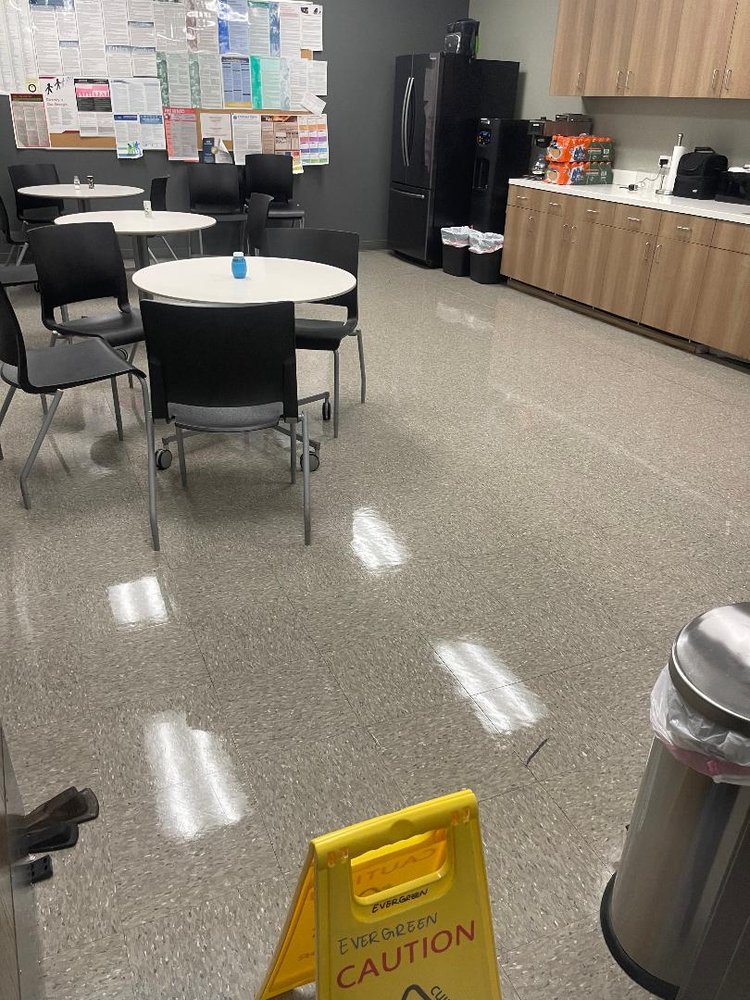
| Break room | Wipe counters, sinks and tables; empty trash | Every visit |
| Open office | Empty trash and recycling; vacuum traffic lanes | Every visit |
| Private offices | Vacuum carpet; dust desk surfaces | Weekly |
| Lobby and entrance | Clean entry-door glass; clean the hard floor | Every visit |
| Throughout | High dusting, vents, baseboards | Monthly |
| VCT corridors | Strip and wax | Its own scheduled line |
Watch for "as needed." A line like "spot clean walls as needed" lets whoever is cleaning decide what's needed, and that's usually where the "that wasn't included" argument starts. Give every line a frequency you can hold someone to, and list rooms that are deliberately left out (a server room, a locked records room) so nobody assumes.
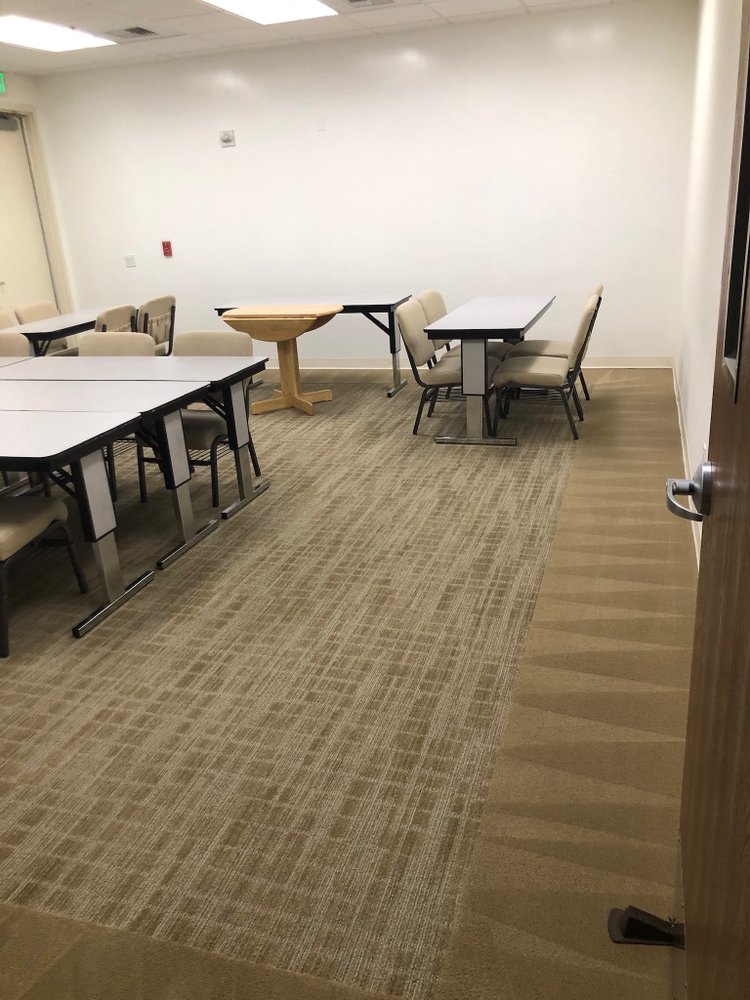
From one of our recurring accounts: we clean a corporate office 3 nights a week, and its scope gives every visit the full list: restrooms, carpet, break rooms, windows and the lobby. Nothing waits for a rotation slot. Another building could put carpet on a weekly line and spend the visits elsewhere.
What do janitorial services include, and what's usually left out?
What's included in janitorial services varies by vendor, but a recurring scope is easiest to read in 3 layers. Exclusions belong in writing as much as inclusions do.
- The every-visit core. Trash and recycling, restrooms, break-room surfaces, and the floors and entrances people walk on most.
- Rotated tasks. Dusting, lower-traffic carpet, interior glass, baseboards, vents and high dusting, each assigned a set day or week.
- Periodic floor care. Strip and wax, scrub and recoat, and burnishing for hard floors like VCT. Strip and wax should be its own line with its own frequency, because the area has to be closed while it's done, typically overnight or over a weekend. It's part of our commercial floor cleaning work and can be scheduled inside a janitorial contract.
These are the items to see named as excluded, or confirmed as included, before you sign. Here's where we stand on each:
- Day porter. Someone on site during business hours. We don't offer day porter staffing; our recurring work is done after hours.
- Regulated medical waste and sharps. That's a job for a medical waste contractor. We clean medical and dental suites as part of after-hours office cleaning, but we don't handle regulated waste or sharps.
- Carpet extraction. Routine vacuuming belongs in a janitorial scope. Deep carpet extraction is a separate service, and we don't offer it on its own.
- Exterior and high-rise windows. Interior glass fits a janitorial scope. Outside and high-rise glass needs a dedicated window company; we don't do it.
Who supplies the paper, soap and liners?
Whoever the contract names. If it names nobody, you'll find out the morning the restroom runs out of toilet paper.
Consumables restocking (toilet paper, paper towels, hand soap, trash liners) should be its own written line, separate from the cleaning tasks. Buying the stock and refilling the dispensers are 2 different jobs, and a contract can give them to different sides. Get it in writing which side buys the stock, who refills the dispensers, and how a low supply gets flagged before it runs out. We can write restocking into a janitorial scope, so consumables stay topped up and anything running low gets flagged.
Chemicals and equipment are the other half. The contract should say who provides them and what gets used in your building. Ask for an SDS for each chemical: under the Hazard Communication standard from the Occupational Safety and Health Administration (OSHA), manufacturers have to provide Safety Data Sheets for hazardous chemicals, so any vendor should be able to hand them over.
If you have staff sensitive to smells or a medical suite on site, ask what's available. We have disinfectants registered with the Environmental Protection Agency and low-odor products available on request.
How long should a janitorial contract run, and how do you get out of one?
Ours run 12 months with a 30-day no-cause exit and the rate locked for the term, on a written scope agreed after the walkthrough. Other vendors' terms vary, so read the term and the exit clause together: a longer term with a clean exit can leave you better placed than a shorter one you can't leave early.
Questions to ask any vendor, with every answer written into the signed document:
- How long is the term, and what date does it start?
- How much notice ends it, and do I need a reason?
- Is the rate fixed for the term, or can it change partway?
- Is there a fee for leaving early?
- What happens at the end of the term? If it renews, how, and on what terms?
What happens when something in the scope gets missed?
No contract can promise a building with zero misses. What it can promise is how a miss gets fixed. When something in our agreed scope isn't done to standard, we re-clean the affected area.
From any vendor, you should see in writing:
- How you report a miss. Who you contact and how: a call, a text, an email.
- How it gets fixed. A re-clean of the area, and whether it's noted so the crew knows for next time.
- What a pattern triggers. Repeated misses on the same line should lead to a scope review, and your exit clause is the backstop.
A contract also can't cover what it doesn't list. If the scope left the storage room off, a dusty storage room isn't a miss. Adding it is a scope change, and it should go into the contract like one.
Can the schedule or scope change mid-contract?
Yes, with ours. If you need more or fewer nights, or a different task list, we revisit the contract and update it to reflect the new schedule. Ask any vendor how changes are made and how they're documented, so the written scope always matches what's actually being cleaned.
Schedules are set per facility, and a split schedule is fine: restrooms and the break room can get more visits than private offices that sit quiet. Work happens after hours. Saturday service is available; we don't clean on Sundays. If you're still deciding the base frequency, here's how many nights a week your building needs.
What drives the monthly price in a janitorial contract?
Our recurring janitorial work is billed as a flat monthly rate, set from the walkthrough. 4 things move it:
- Frequency. Each night added is another pass through the every-visit scope.
- Foot traffic. A small office with busy restrooms and a packed break room can take more labor than a larger, quieter one.
- Square footage. The space the crew actually cleans, measured on site.
- Team size. A bigger or more detailed scope needs more people on site to finish within the night.
Check one more line before comparing bids: janitorial services for commercial buildings are generally taxable in Texas (see the Comptroller's guidance on janitorial services). Ask whether each quote includes sales tax, or 2 proposals that look close can end up apart on the invoice. For how a monthly rate gets built and how to line bids up, see our guide to janitorial services pricing.
What should you check before you sign?
Run this janitorial checklist against the final document:
- After-hours access. Who holds keys or fobs, who has the alarm code, and how the building is secured when the crew leaves, all written down.
- Insurance. A current certificate of insurance. We're fully insured, and a certificate is available on request.
- Who's cleaning. Ask whether the same people come each visit. Our recurring accounts get the same crew every visit, so the people who learn your building keep cleaning it.
- Safety training. Ask what training the vendor's people have. Our owner-operator, Charles Penn, is OSHA 30-certified.
- How the price was set. A recurring price set without seeing the building is built on guesses about square footage and traffic. Ours starts with a free on-site walkthrough, before any number.
We work across Dallas, Tarrant, Denton and Collin counties. To see the full recurring scope we write from, visit our page on janitorial services in Dallas, or request a free walkthrough and we'll draft a scope you can hold up against this list.