Professional commercial concrete floor cleaning starts with sweeping and pre-treating oil, then scrubs the floor with a machine and a pad or brush matched to the concrete. The dirty water is extracted and rinsed, not mopped around. Heavy buildup takes more than one pass, and a floor that stays dull afterward usually needs to be stripped, degreased and sealed.
Texas Industrial Cleaning Services is a commercial cleaning company serving the Dallas–Fort Worth Metroplex. We provide office cleaning, commercial floor cleaning (including stripping and waxing), and recurring janitorial services for offices, medical and dental practices, and multi-tenant buildings across Dallas, Tarrant, Denton and Collin counties.
What does professional concrete floor cleaning involve?
It involves sweeping, pre-treating oil, machine scrubbing, extracting the dirty water, and letting the floor dry. This is how the work is generally done on commercial concrete:
- Dust-mop or sweep so grit isn't ground into the surface.
- Pre-treat oil and grease spots with a degreaser and give it time to work, per the label.
- Scrub with an autoscrubber or rotary machine, using a pad or brush matched to the floor. Textured or porous concrete usually calls for a brush.
- Extract the dirty water and rinse, so the soil leaves the building instead of drying back into the pores.
- Neutralize if a strong alkaline product was used.
- Let the floor dry completely.
Years of buildup rarely come up in one pass. Expect a second pass on the worst areas.
When does in-house mopping stop working on commercial concrete?
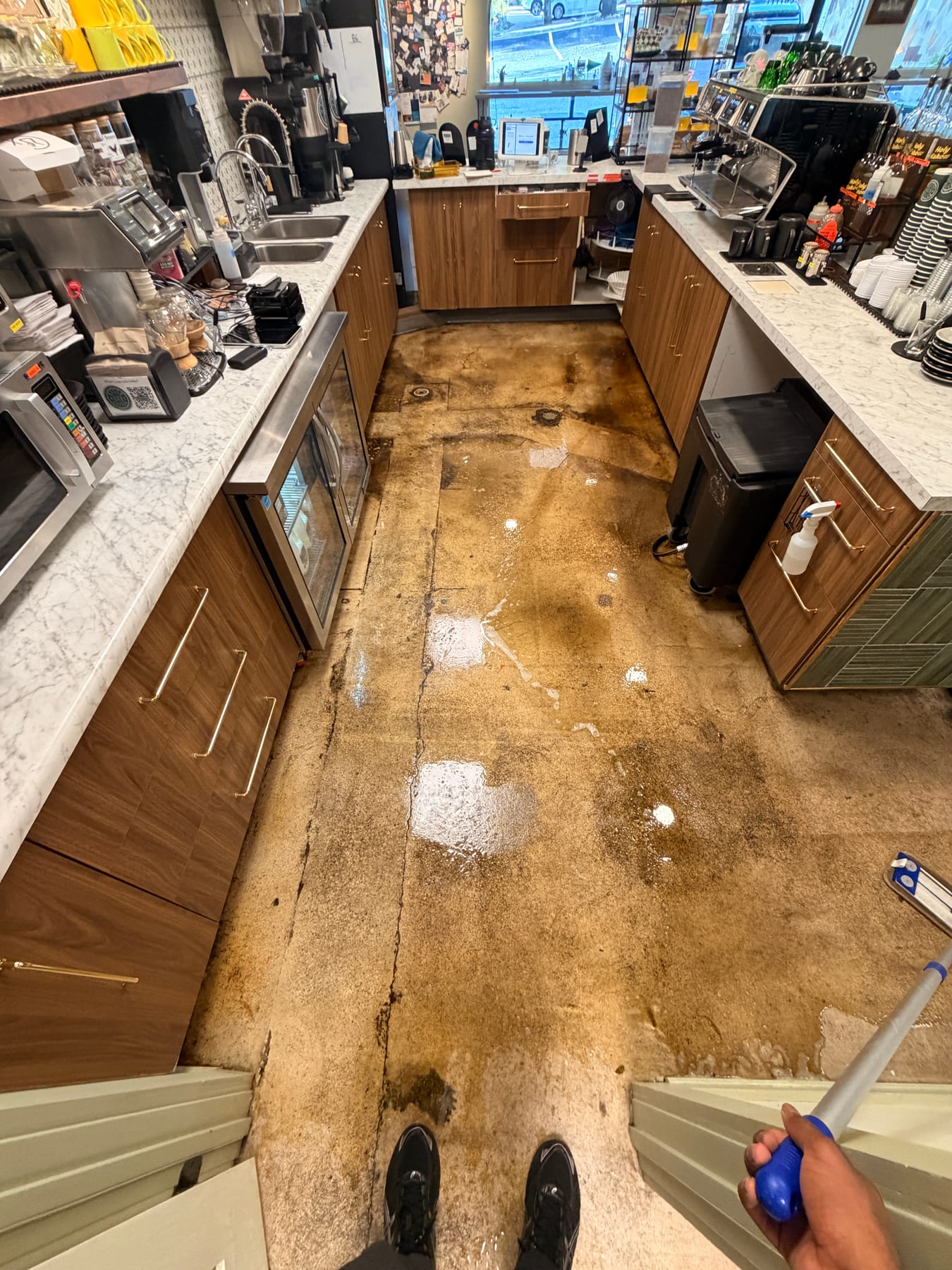
Mopping stops working when the floor looks dirty again soon after being mopped. Concrete is porous, so a mop pushes dirty water into the pores and leaves a film behind rather than lifting soil out.
The usual signs:
- A gray film that returns after every mopping.
- A dull, matte look where traffic is heaviest, even when the floor is clean.
- Soil visibly worked into the pores of the surface.
- Oil tracked from one area into the next.
The same applies to warehouse concrete: it's a hard, porous surface, and it responds to machine scrubbing and extraction in the same way.
How do you get oil and grease out of commercial concrete?
Oil comes out of concrete with an alkaline degreaser, time and a machine scrub. Spraying and wiping doesn't work because the oil has soaked below the surface.
Degreasers need dwell time, and the manufacturer's label sets how long. After the dwell, the area is agitated with a brush or pad and the residue is extracted. Fresh spills lift easily. Old stains are different: oil that has sat for years may lighten rather than disappear.
Should a commercial concrete floor be sealed?
Sealing is worth considering when concrete is porous, stains easily or is hard to keep clean. A sealed floor is generally easier to keep clean than a bare one.
Before a sealer goes down, the floor has to be clean and degreased. Sealers wear in traffic lanes, and commercial concrete is typically resealed every 3 to 5 years.
We strip, degrease and seal concrete. We don't grind it. Diamond grinding and polished-concrete installation are a different trade, and if you want a ground-and-polished slab, hire a contractor that does that work.
What did a real concrete restoration look like?
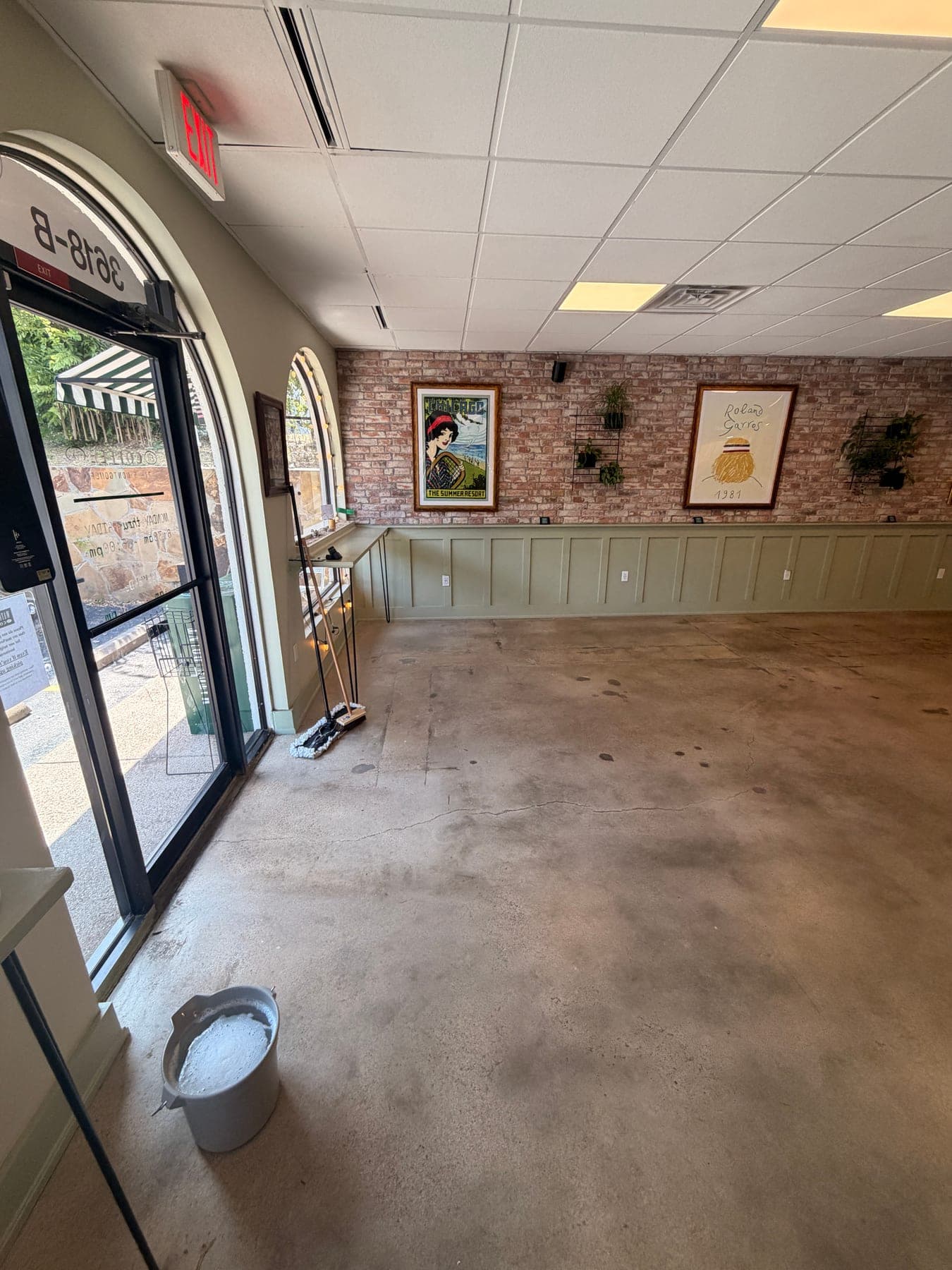
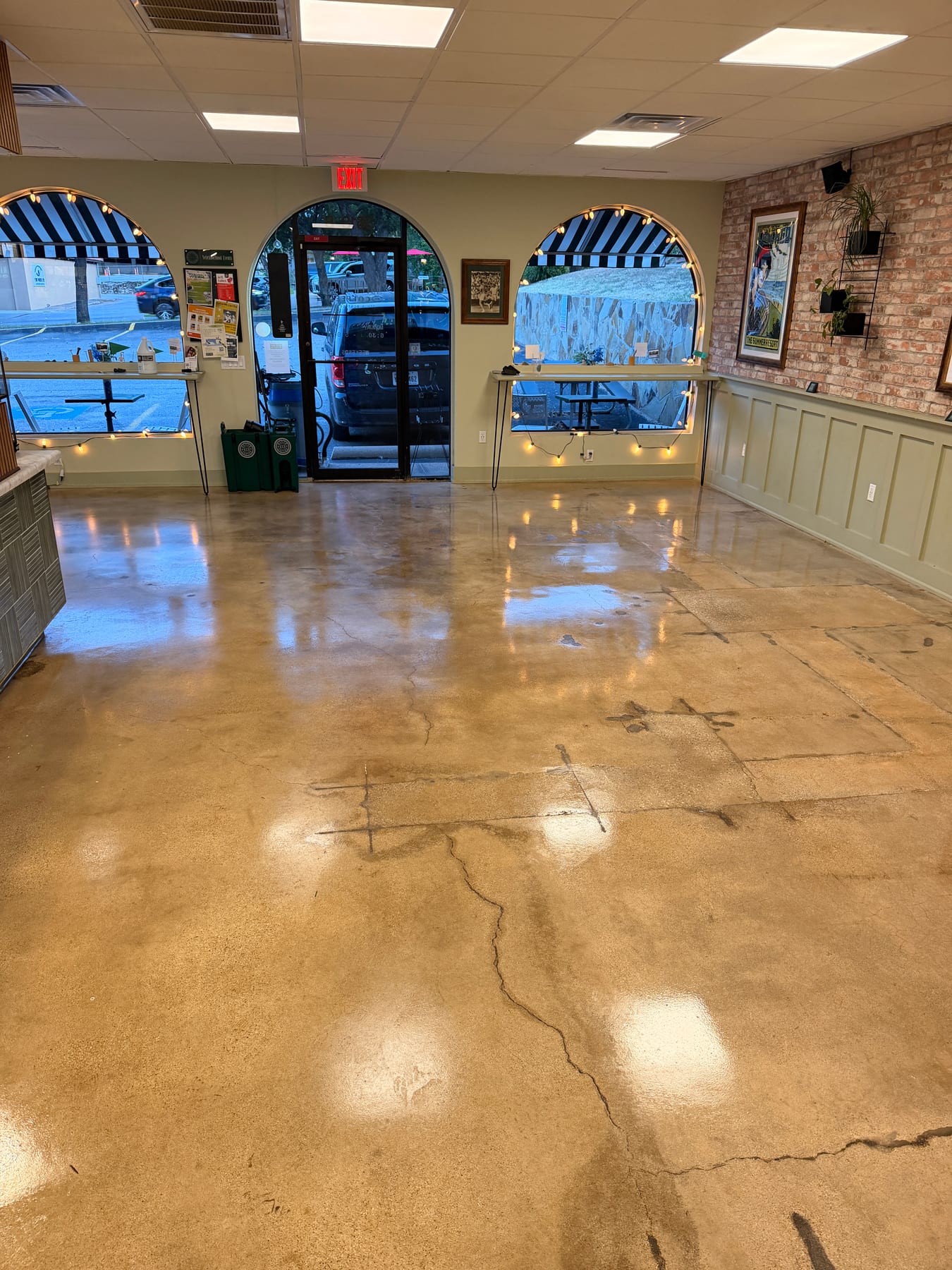
A café's roughly 2,000 sq ft of dull concrete went from matte to glossy with a three-step strip, degrease and seal.
This was one of our own jobs, covering the café's concrete floors from the dining room to the sales floor. There was no grinding: the existing slab was stripped, degreased and resealed with an all-in-one sealer and finish coat, and it came out glossy and reflective. The photos on this page are the same rooms.
How often does commercial concrete need cleaning?
Commercial concrete should be deep-cleaned every 6 to 12 months and resealed every 3 to 5 years. Traffic, how much soil and oil the floor sees, and whether it's sealed decide where a floor falls in that range: an unsealed floor in a high-traffic or greasy area needs it sooner.
Between machine cleans, daily dust-mopping and damp-mopping or autoscrubbing keep grit off. Concrete follows a different rhythm than a finished tile floor, which has its own strip and wax cycle. The deep-clean interval is set at the walkthrough, based on how the floor is actually used.
What affects the cost of cleaning and sealing concrete floors?
Scope is the biggest driver, meaning what the floor needs, from a scrub to a full strip, degrease and seal. After that:
- Square footage. Bigger floors cost more in total.
- Condition. How worn or soiled the floor is now.
- Sealed or unsealed. An existing sealer may need to come off first.
- After-hours access. Work around business hours changes the schedule.
A floor like the café on this page, about 2,000 sq ft of concrete that needed a three-step strip, degrease and seal, typically runs $1,500 to $2,000. Scope decides where a floor lands, and a free on-site walkthrough sets the exact price.
How do you hire concrete floor cleaning in Dallas–Fort Worth?
Start by requesting a quote: you get pricing or a free on-site walkthrough within one business day. We work in buildings of 1,000 sq ft and up across Dallas, Tarrant, Denton and Collin counties.
Concrete work can be a one-time restoration or a recurring schedule, depending on your foot traffic and business needs. Floor work is scheduled for nights, Saturdays, or around your shifts. If something doesn't meet the agreed scope, we re-clean the affected area.
We're fully insured, and a certificate of insurance is available on request. We're owner-operated and not a franchise.
See our commercial floor cleaning services, or request a free walkthrough. If the floor is in a restaurant, see restaurant cleaning for that scope.